

The rupee had ended lower by 19 paise at 56.15 against the dollar on wednesday as importers bought dollars in late trade.

The Indian rupee recovered by four paise to 54.99 after touching all-time low of 55.07 against the American currency in the late morning trade due to mild selling of dollars by banks following following measures taken by RBI to curb the local currency's fall.

Fresh demand for dollars from banks and importers in view of firm dollar in the overseas market mainly affected the rupee value against the US unit, a forex dealer said.

Even as rupee fell below 56-level against dollar intra-day, Chief Economic Adviser in the Finance Ministry Raghuram Rajan said, there is no need to panic, and RBI takes decisions on whether to intervene in forex markets or not to stabilise the local currency.
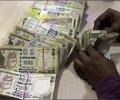
The rupee hovered in a range of 53.85-54.24 per US dollar during the day.

Dollar gains against other currencies overseas amid euro zone debt concerns also put pressure on the Indian rupee.
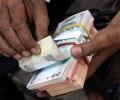
Bouts of dollar demand from importers put pressure on the rupee

Tokyo -- the songs Japan, Love In Tokyo and Sayonara from the 1966 Hindi film automatically pop up in the mind -- is buzzing and crowded like any other metropolis, discovers Deepa Gahlot. The modern apartment blocks are built cheek by jowl, so close together that one can open the window and borrow sugar from the neighbour in the next building. One of the fears of the Indian traveller is the unavailability of vegetarian food. Every city and town in Japan has an array of Indian restaurants that serve every variety of cuisine, right from Gujarati to Punjabi to Andhra and Kerala meals.

Latest Messi tribute in Argentina recycles the joy from icon's big win

The domestic unit had lost 7 paise to close at 66.87 in Tuesday's trade.
The domestic currency moved in a range between Rs 52.80 and Rs 53.18 per dollar during morning deals.

Overseas, the US dollar hovered near a three-week low.

Sluggish domestic equities and persistent capital outflows largely pressurised the Indian unit

The rupee on Friday fell by 9 paise to 67.64 per dollar on fresh demand for the American currency.
The dollar's strength against other currencies overseas limited the rupee's gain.

The rupee rose by seven paise to 62.10 against the dollar.
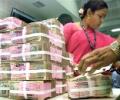
The rupee on Friday breached the psychological 47-mark after six-and-a-half months on heavy dollar outflow, but ended the day with a marginal fall of 15 paise against the American currency at 46.96/97.

The domestic currency moved in a range between Rs 53.03 and Rs 53.24 per dollar during morning deals.

Sustained dollar demand from banks and importers in view of dollar firmness in overseas markets.

According to a new report published by Switzerland-based BIS, which is also referred as 'bank for central banks', the US Federal Reserve's announcement of a possible phasing out of easy money regime has resulted in 'abrupt and sizeable' equity market losses in both advanced and emerging markets.

The dollar index was down 0.01 per cent at 95.86 against a basket of six currencies in early trade

The rupee had dropped 18 paise against the dollar on Thursday.
The ECB on Thursday cut its main refinancing rate to zero from 0.05 per cent.

A stable dollar will at minimum reduce incremental cross-currency pain for Indian cos.
There was sustained selling of the American currency by exporters ahead of a decision of US Federal Reserve on tapering its monetary stimulus.
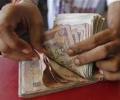
The rupee ended almost flat against the dollar.
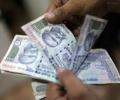
The price rise of essential food items like vegetables, fruits and cereals, pushed up inflation to five-month high of 6.01 per cent in May.

Lead indicators suggest that domestic current account deficit (CAD) is likely to reduce in 2023, while macro-economic stability has received a boost from inflation being brought back to the official tolerance band, according to the Reserve Bank of India's (RBI's) January 2023 Bulletin. "With the merchandise trade deficit reaching an all-time high of $83.5 billion in a quarter, and a rise in net outgo from the income account, the current account deficit increased to 4.4 per cent of GDP in Q2FY23," the State of the Economy article in the bulletin said. "It is noteworthy, however, that the CAD for Q1 was revised down from 2.8 per cent to 2.2 per cent on account of downward adjustment in Customs data.

The rupee on Monday appreciated by 11 paise to 54.64 against the US dollar in early trade at the Interbank Foreign Exchange, aided by selling of the American currency by exporters and banks.
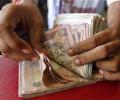
The local currency moved in a range of 59.80 and 60.05 per dollar during the morning trade.

A sluggish dollar movement in overseas markets and continued capital inflows restricted the rupee fall to a major extent, forex dealers said.

The domestic unit had lost 9 paise to close at fresh two-and-a-half-month low of Rs 55.21 per dollar in the previous session on continued dollar demand from importers.
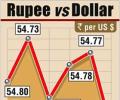
Indian stocks and the rupee have benefitted from dollar liquidity induced by the US Fed stimulus.

The dollar index was last trading up by 0.04 per cent against a basket of six major global rivals.

Forex dealers say dollar rose against the euro after the European Union cut its economic growth forecast.

The rupee had gained by 57 paise, or 1.04 per cent, in previous two days.

The domestic unit hovered in a range of 66.45 and 66.61 per dollar during the day.
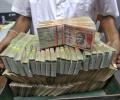
The rupee fell because of fresh demand for dollar from importers.

Fresh dollar demand from importers and some banks on the back of smart rise in the US dollar ahead of RBI monetary policy meeting on Tuesday also weighed on the rupee, said forex dealers.
 © 2026 Rediff.com - Advertise with us - Disclaimer - Privacy Policy - Sitemap - Feedback - About us - Terms of use - Grievances